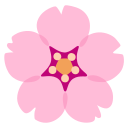
🌸 is one cherry blossom with five pale-pink petals in full bloom. It came from Japanese mobile-phone emoji and entered Unicode in 2010, and of all the flower emoji it carries the strongest sense of season. Spring, picnics under the trees, the start of a school year and the bittersweetness of petals that fall within a week are all packed into one flower. In Korea and Japan, messaging apps and social feeds are covered in 🌸 from late March to mid-April. In English the meaning is broader and leans toward “pink” and “pretty” rather than a specific moment.
How it’s used
- Spring greetings: “The blossoms are finally out 🌸”
- Making plans: “Who’s up for the park this weekend 🌸🌸”
- New beginnings: “Congrats on starting college 🌸”
- Decoration: a caption for a selfie or café photo
- Mood setting: a soft, feminine touch next to a profile name
If 🌷 and 🌹 mean a flower itself or a gift, 🌸 means a time. Nobody gives cherry blossoms as a present, but telling someone the blossoms are out works as a seasonal greeting for anyone. 💮 looks similar but is a Japanese teacher’s “well done” stamp, so its job is different.
Korea, Japan and the English-speaking world
In English the seasonal feeling is weak outside cities with blossom festivals, such as Washington, D.C. or Vancouver, and 🌸 is mostly a pretty pink flower. It decorates captions, signals a soft spring aesthetic, and often sits in a bio as a hint that the person is into Japanese or Korean culture, K-pop or anime. Treating it as “spring-flavored decoration” is usually the right read.
In Korea the bloom coincides with the new school term, midterms looming and a whole genre of cherry-blossom love songs, so the emoji mixes excitement with a little self-mockery. “No one to see the blossoms with 🌸” is a classic single person’s lament, and photos from famous spots like Jinhae or Yeouido get the emoji almost automatically. Once the petals fall, usage drops sharply, which makes it a rare emoji with an expiry date.
In Japan 桜 (sakura) is close to a national symbol. School and company years begin in April, so the blossom is bound tightly to fresh starts, and the old telegram phrase サクラサク (“the cherry blossoms bloom,” meaning “you passed”) still shows up as an emoji on exam-result day. Hanami announcements, bloom forecasts and spring-only products all carry it. It is also used in wistful posts about how briefly the flowers last.
Where it gets misread
- In Japanese, サクラ is also slang for a planted fake customer or shill. Attaching 🌸 to a post about reviews or an event can accidentally read as “these are all fakes.”
- 🌸 and 💮 are both pink flowers, but 💮 is a “good job” stamp and looks odd in a spring greeting.
- 🌺 (hibiscus) says summer and Hawaii, not spring.
- A 🌸 sent purely as decoration is sometimes taken as a shy romantic gesture. Pairing it with words is safer than sending it alone.
Design differences by platform
Apple draws a deep-pink flower with notched petal tips and clear white stamens, the closest to a real cherry blossom. Google’s Noto petals are rounder and paler, giving a softer impression. Microsoft’s Fluent version has three-dimensional shading that makes the petals look plump, while Samsung’s colors are more vivid with a yellow center that can resemble a plum or peach blossom. The notch at the petal tip, the giveaway of a true cherry blossom, varies by platform, and some Japanese users like to point out that certain versions are technically plum blossoms.